The Power of Analogue in a Digitalised World
Reduce your digital footprint to boost your creativity, cognivity and sales
As the dangers of digital convenience and Artificial Intelligence (AI) dependency become ever more apparent, its a good time to reflect on the way we used to do things and look deeper into what
analogue
actually means. We know now that the use of digital can result in the loss of individuality, authenticity and connection as human beings. The good news is that the demand for analogue continues to rise, and it's a culture trend that's been growing for the last fifteen years.
Ever since the ubiquitous smartphone was introduced in 1994, and especially since the launch of the Apple's App Store and Google's Android Market in 2008, the dramatic shift to an increasingly digital way life has beset us all and completely changed our lives. During this time, we have been led to believe that analogue and the old ways of doing things have been left far behind.
I hadn't given this much thought until I came across a fascinating book called The Revenge of Analog by Canadian author and journalist, David Sax. It was published in 2017 and, I believe, is more relevant today than it was nearly a decade ago. In my reivews, here (coming soon) and on Spiral Leaf (where I focus on how analogue brings us closer to ourselves, each other and Mother Nature), I share the heartwarming fact that, despite the digital revolution, our craving for the tangible, tactile and sensual experience of analogue is alive and well.
It means our need to fully engage each of our senses, to exercise our mind and connect with fellow human beings, cannot be supressed. It means we no longer have to make excuses for reading a book or writing a daily journal. It means there are countless book clubs, boardgame cafes, gardening brigades and all manner of other groups, coming together in their communities to embrace analogue for all the benefits it brings. For business owners, it means having an edge when it comes to doing things and delivering things in uniquely non-digital ways.
Not only this, David's book reveals that analogue is favoured by corporate executives and digital giants who consider it to be
the most effective and efficient way to do business. Also, thanks to Gen-Z - who appreciate the value of analogue to express their identity, fulfil their sense of ownership and connect with friends - is now considered cool. While they are not likely to ditch their smartphones anytime soon, it's refreshing to know they are weaving more analogue into their lives and enjoying themselves in the process.
What is analogue?
The word analogue (or analog) comes from the Greek words ana, meaning up to, and logos, meaning ratio or proportion. It first appeared in computer language in 1946 as an adjective to describe a type of signal that is continuous in amplitude. Since then, it has been largely replaced by a digital signal and the tools that come with it for every situation. The meme: there's an app for that, derived from Apple's highly successful advertising campaign became popular as a means to corral us into a new way of digital living.
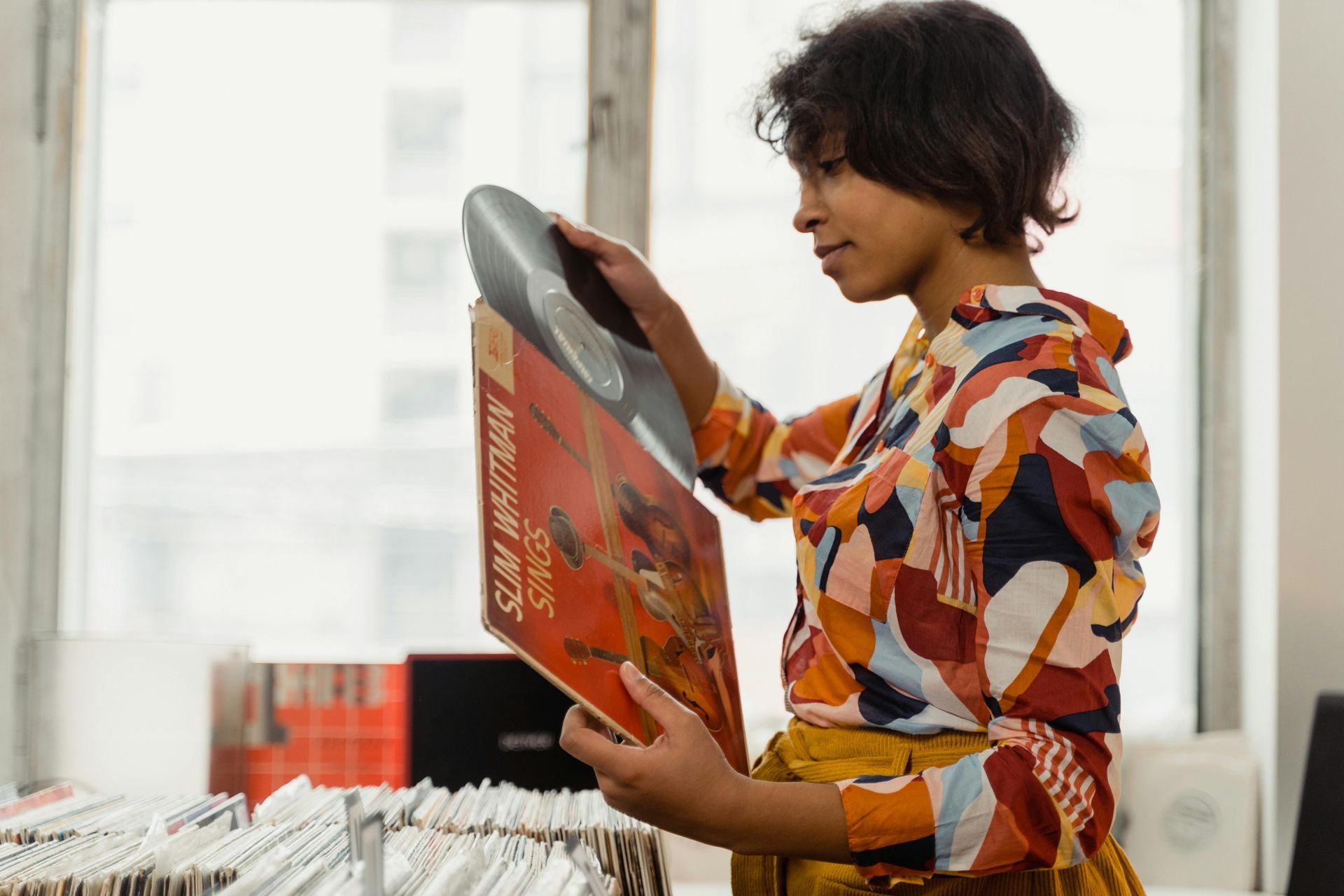
Analogue describes the continuous, smooth waves (or sine waves) of physical quantities such as sound or temperature. At a lower bandwidth, analogue processes, whether in vinyl records, film photography or the human voice, excel at capturing nuances because they record data in a continuous, physical manner that directly mirrors the original source.
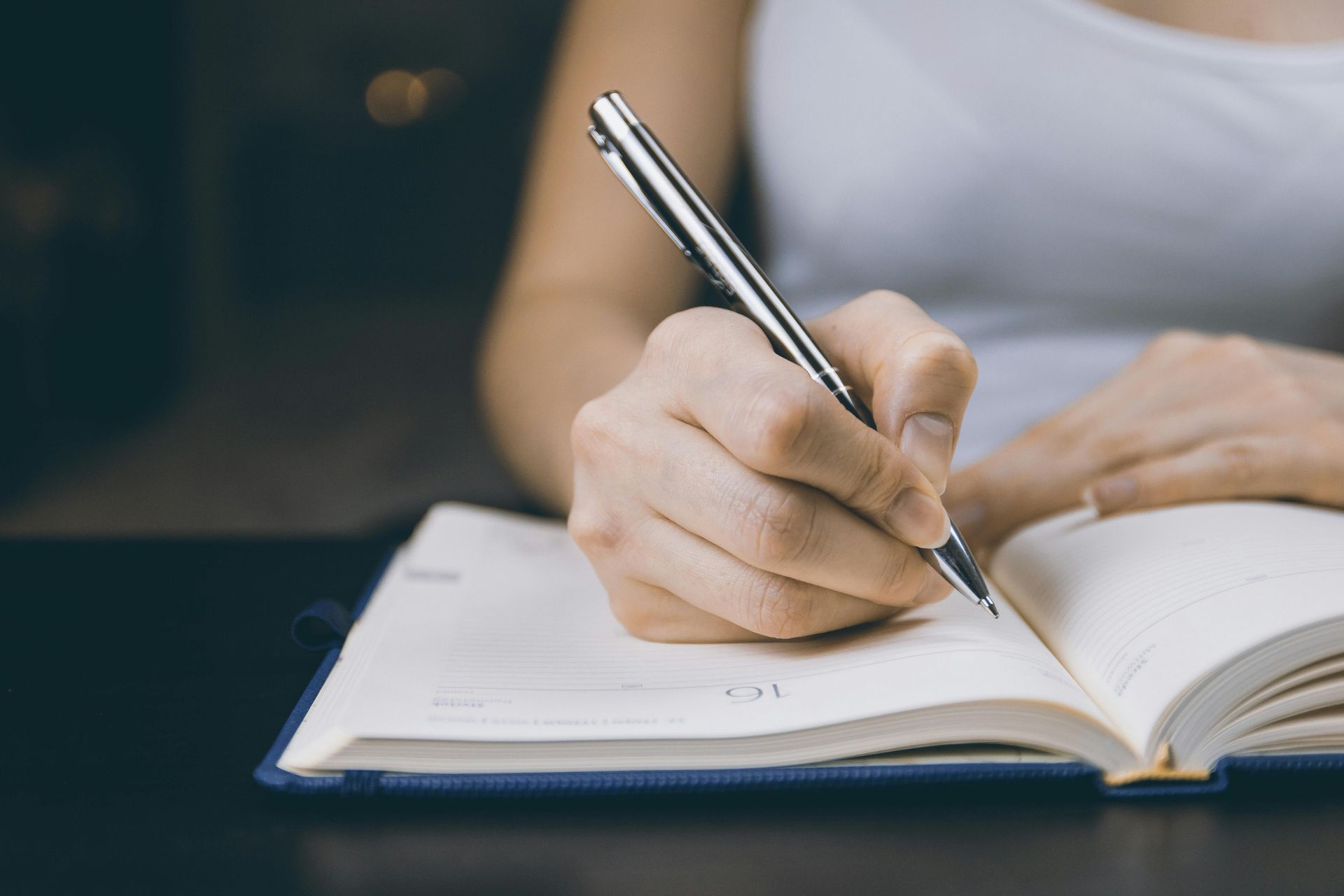
Analogue describes manual activities such as writing which is a direct, physical process where the body (hand) interacts with a tangible tool (pen) and a tangible medium (paper) to create a representation of thought. Such activities activate different part of the brain which improves memory, fosters deeper focus and provides a unique sensory experience distinct from the automated, often distracting, digital world.
This is why analogue behaviours, tools and techniques represent an extension of our mind's natural process, allowing for a more human, connected and intentional form of creation. The main part of analogue's appeal (and the reason for its staying power) is the power of its continued use and elevance. It comes from the need for us to create our own style and identity, to enjoy the satisfaction that comes from owning tangible things that we value, and from doing things for ourselves in our own way.
Analogue provides the means to experience life first hand and to share experiences with others in real time. It gives us our most memorable moments, the opportunity to learn new skills through practice and the connectivity needed to form lasting bonds.
What is digital?
The word digital describes electronic technology that generates, stores and processes data in terms of positive (1) and non-positive (0) states or values. These binary values (0s and 1s) represent continuous data that inherently loses nuance by breaking things down into mutually exclusive categories. This is why digital data must be converted from analogue for computers to process it and not the other way round.
It means that AI can never create anything from nothing or produce anything original by itself. It is the reason why many writers and artists are raising objection to the way AI takes their work to teach itself how to produce copies (and variations) without any acknowledgement or commission arrangements. In his article - The Harm and Hypocrisy of AI Art - digital product designer, Matt Corrall, states: all that ‘data’ has so far mostly been scraped from the internet - taken in secret from people who didn’t know and didn’t consent to handing it over. Low-paid workers are used to manually filter offensive and upsetting images out of the datasets, and to type out description tags for the millions of images, so that the machine knows what its looking at.
Considering the serious harms being caused by enormous AI data centres with a ferocious appetite for energy and water - causing 24 hour noise pollution and depriving local communities and wildlife of clean water - we would do well to think about how we are playing our part in all this and how much we are missing out on by not living in the real word.
Writers, artists and creators across different disciplines have spoken out or signed open letters against the non-consensual and unlicensed use of their work for training generative AI. It is a direct infringement on copyright to steal and use content without an artist's permission. When idententical digital copies of artists' work (or parts of it) are sold commercially online for much lower prices, it devalues the original work and harms the livelihood of artists who have dedicated their lives to developing their craft.
More people are rediscovering analogue because as human beings we value originality and authenticity. We appreciate things that resonate with us and we love good story. It means creative pursuits will always have a place in our lives. You can never stop an artist from creating or a writer from writing. We are born with creative ability and we should nurture it using analogue because you can never replace the human experience with a heart-less and mind-less bot or a machine.
The digital detox
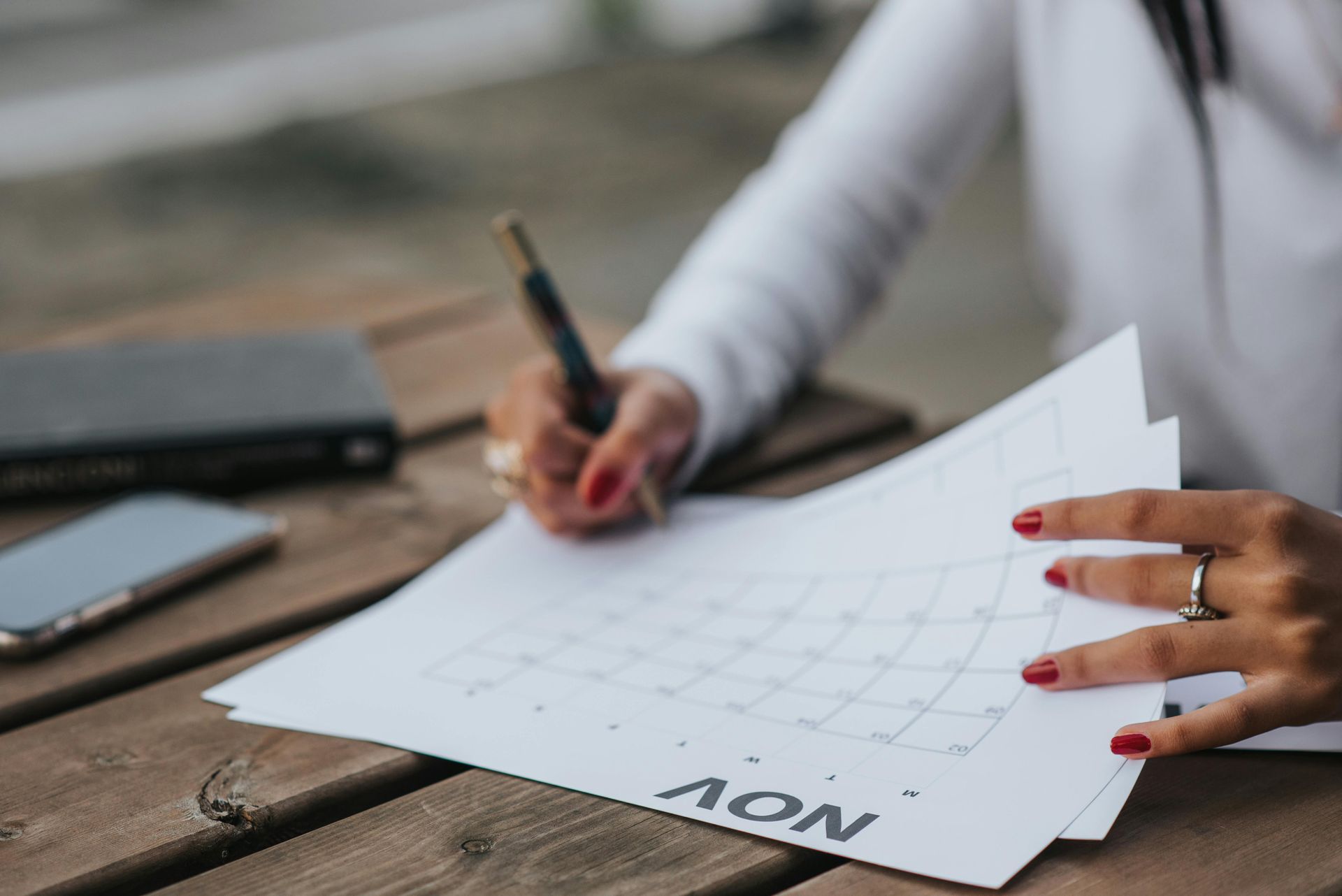
When I first got used to using a smartphone, I downloaded different apps over the years that promised to help me organise my life and my business in a seamless flow of daily reminders, notifications and (as it turned out) offers to upgrade. I tried some online productivity platforms such as Evernote and Trello. I liked the idea of having everything immaculately organised, perfectly stored and immediately accessible - wherever I happened to be and whatever I needed to do.
The reality was very different. I spent hours watching tutorial videos and reading books such as Getting Things Done by David Allen. I attempted to devise a unique filing system that accounted for every eventuality and then would set out to find information to put in it. I never ended up finishing it or using it as intended, and the entire time I continued to use my seemingly ineffective and comparatively scruffy analogue system of a diary, various notebooks, endless lists, a mechanical pencil and a fountain pen.
I say, seemingly ineffective, because when I look back, I have always produced more than I could have imagined. I have never missed a deadline or not put my heart and soul into everything I do. This has been the case for the last 40 years of my working life so what is the problem? I say, comparatively scruffy, because compared to pictures of the productivity tools and apps, my arrangement does look that way. My doodles, notes written in all directions, endless crossings-out, ticks and stars, are no match for the orderly day-glo-colour-coded folders, files, documents and images seemingly required to make me more productive.
In the end, I give up and sit down to write a NEW LIST. I transfer notes I haven't used from various notebooks into the current one and update my old lists. I realise how much I enjoy the process and that my system is neither
ineffective nor
scruffy -
it works like a dream and looks like I did it - and there will never be an app for that.
The analogue edge
If you are running a small business or enterprise, apart from experiencing a boost in creativity having slowed down to organise your thoughts and plans the analogue way, there is another reason to return to the old way of doing things. Not entirely, of course, only where it might be of benefit to you, your customers and potential customers.
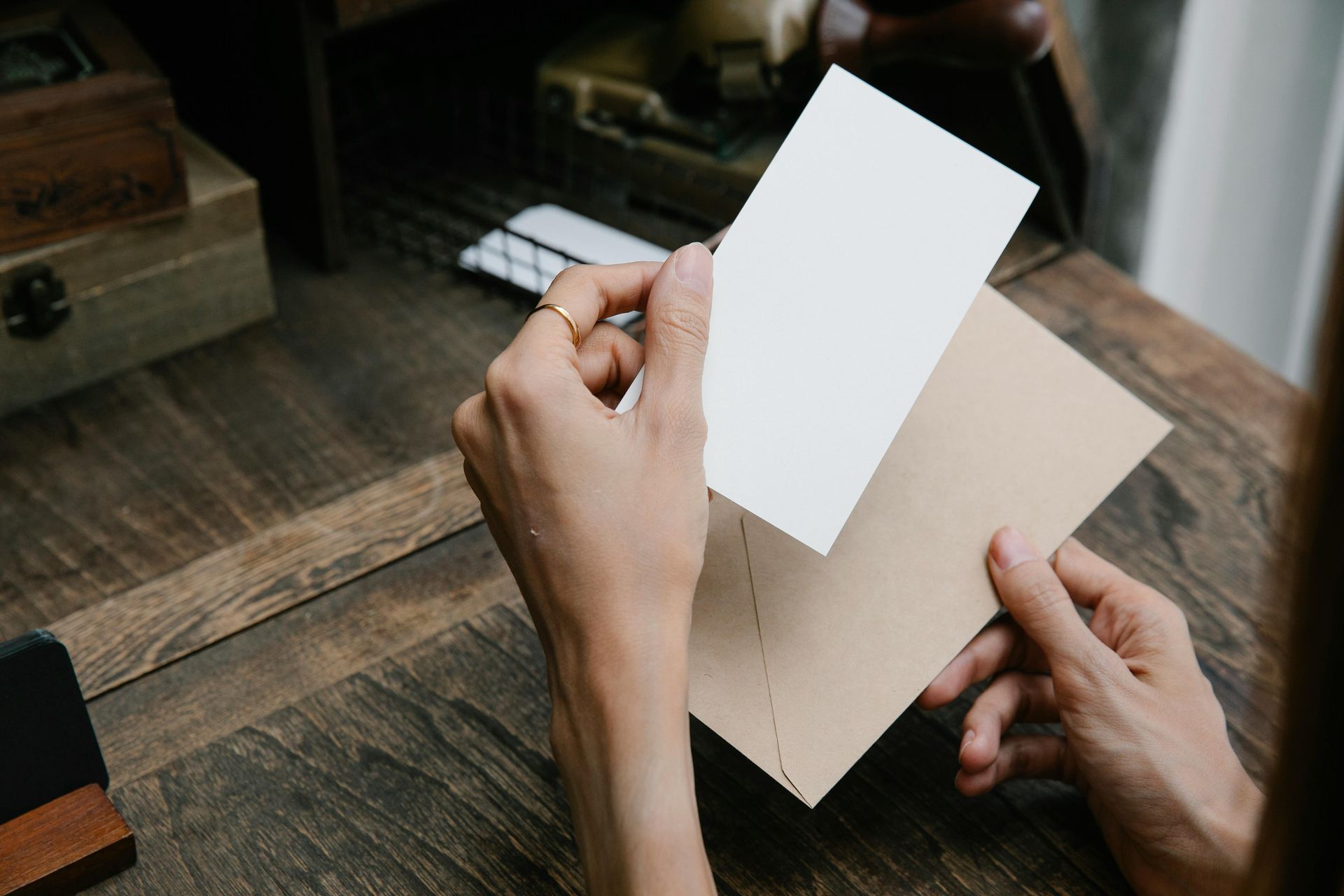
The easiest way to impress someone, is to do something different, and in this digital age, this can be as simple as sending something in the post. A meaningful, well presented message intended as a gift requires little effort and could bring unforeseen rewards and opportunities. Here are a few ideas that may serve to delight your customer:
- A welcoming seasonal card
- An open invitation to join or attend
- A personal thank you note
- A product sample with a card to return with a review
- A gift wrapped in paper and tied with string
- A Gift Voucher inside a blank a card
- A quirky or customised bookmark
All these things can be handmade (if you are so inclined) or they can be bought online (or locally) by creatives who make beautiful cards, paper. boxes and envelopes using natural materials. When done correctly, preferrably hand-written and sent at the right time, receiving something analogue that can be touched, felt, sensed and experienced, will be remembered and so will you.
I hope you enjoy bringing more analogue into your life (and business) and I look forward to seeing you again soon.
Sue Cartwright AInstAM
Sole Trader Services
Further Reading
What is a Home Office and Why Do You Need One? by Sue Cartwright, Sole Trader Services
HOW TO set up a Home Office - Sue Cartwright, Sole Trader Services
Thank you for sharing and spreading the word